Campus hiring assessments fail more often from logistics than from question quality. The paper might be well-designed, but if the invite reaches candidates two hours before the window opens, if the link does not work on mobile data, or if the results are not ready before the interview team arrives the next day, the drive becomes a coordination disaster. This playbook covers the operational decisions that make campus hiring assessments run smoothly at scale — from drive setup through results handoff.
Campus hiring compresses a normally distributed hiring process into a single day or two. You may have hundreds of candidates from multiple colleges, all taking the same assessment in a short window, with interview panels waiting for shortlists the next morning. The margins for error are thin. Unlike lateral hiring, you cannot ask candidates to reschedule if something goes wrong — the drive day is fixed.
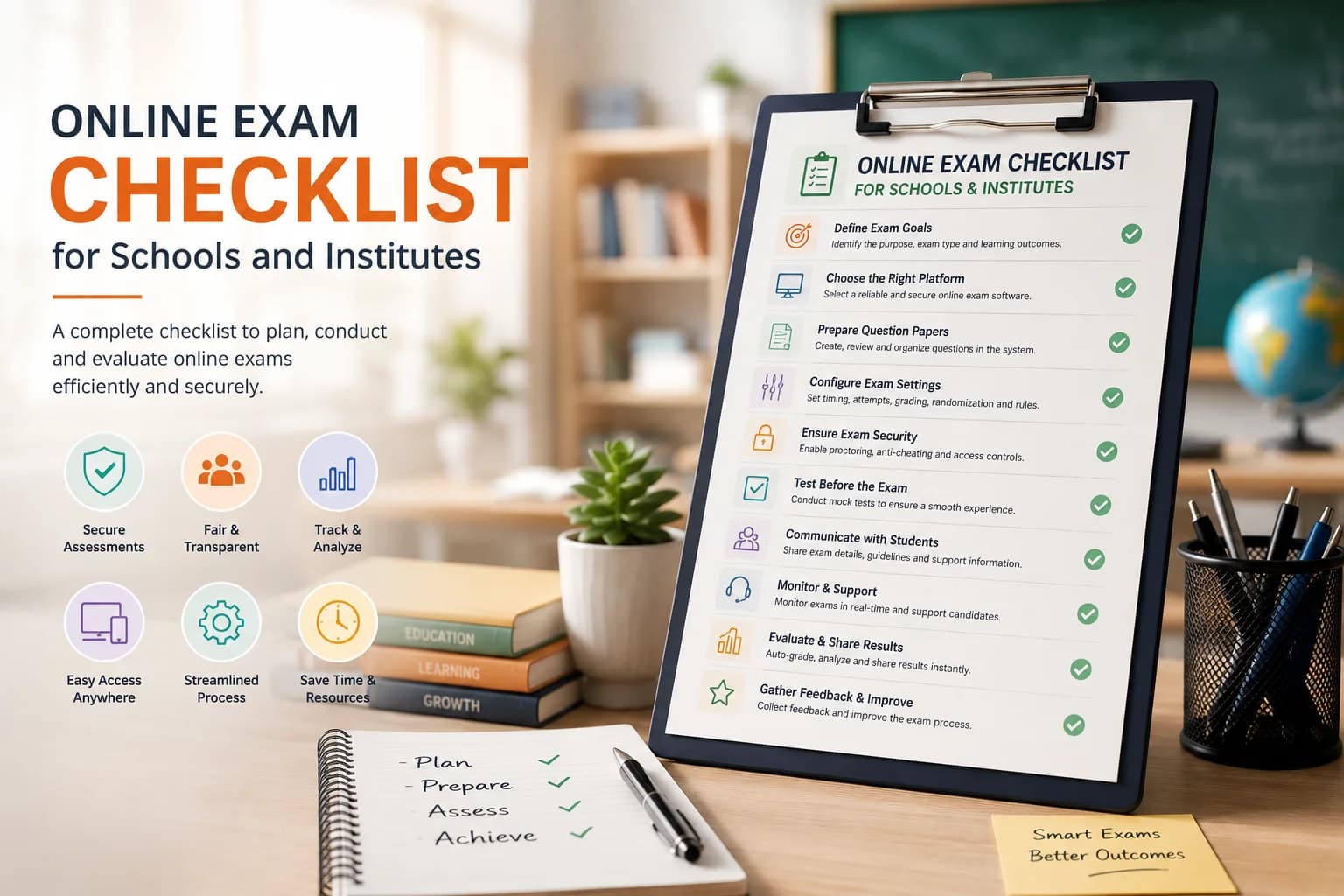
Campus placement coordinators are your primary logistics partners on the college side. Brief them on the exact process at least one week before the drive: what information to communicate to students, when to share the link, what to tell students about device requirements, and who the technical support contact is. A clear briefing document sent to the placement cell reduces last-minute messages on drive day by 70% in most cases.
Ask placement coordinators to confirm the candidate list two days before the drive, not one. Last-minute additions after invites are sent create attribution gaps — a candidate who joins using a shared link cannot be tracked individually. Send invites to the confirmed list only, and have a small buffer of spare invite slots for genuine late additions that come with 24 hours' notice.
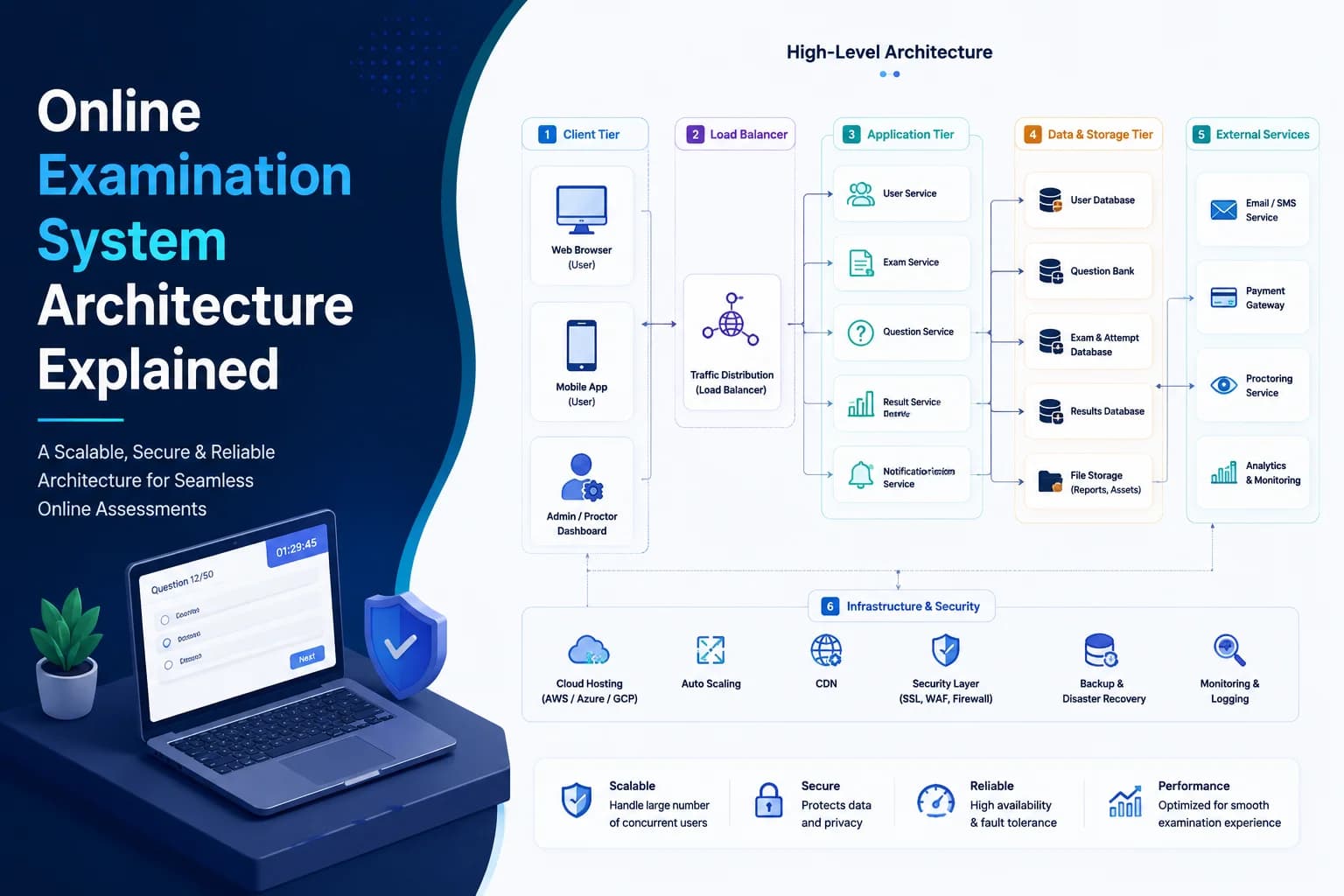
If you are running the same assessment across multiple colleges simultaneously, confirm that your platform handles the expected concurrent user count. Most hosted platforms are fine for a few hundred simultaneous attempts. If you are running a national drive with thousands of simultaneous candidates, test with the vendor first or stagger batches across time slots. A 30-minute stagger between college batches is usually enough to smooth concurrency spikes.
Send invites at least 48 hours before the window opens — not on the morning of the drive. Use the dashboard email invite feature to batch-send personalised links rather than pasting one link into a group message. Personalised links give you per-candidate attempt tracking; a shared link makes it impossible to know which score belongs to which candidate until they manually identify themselves.
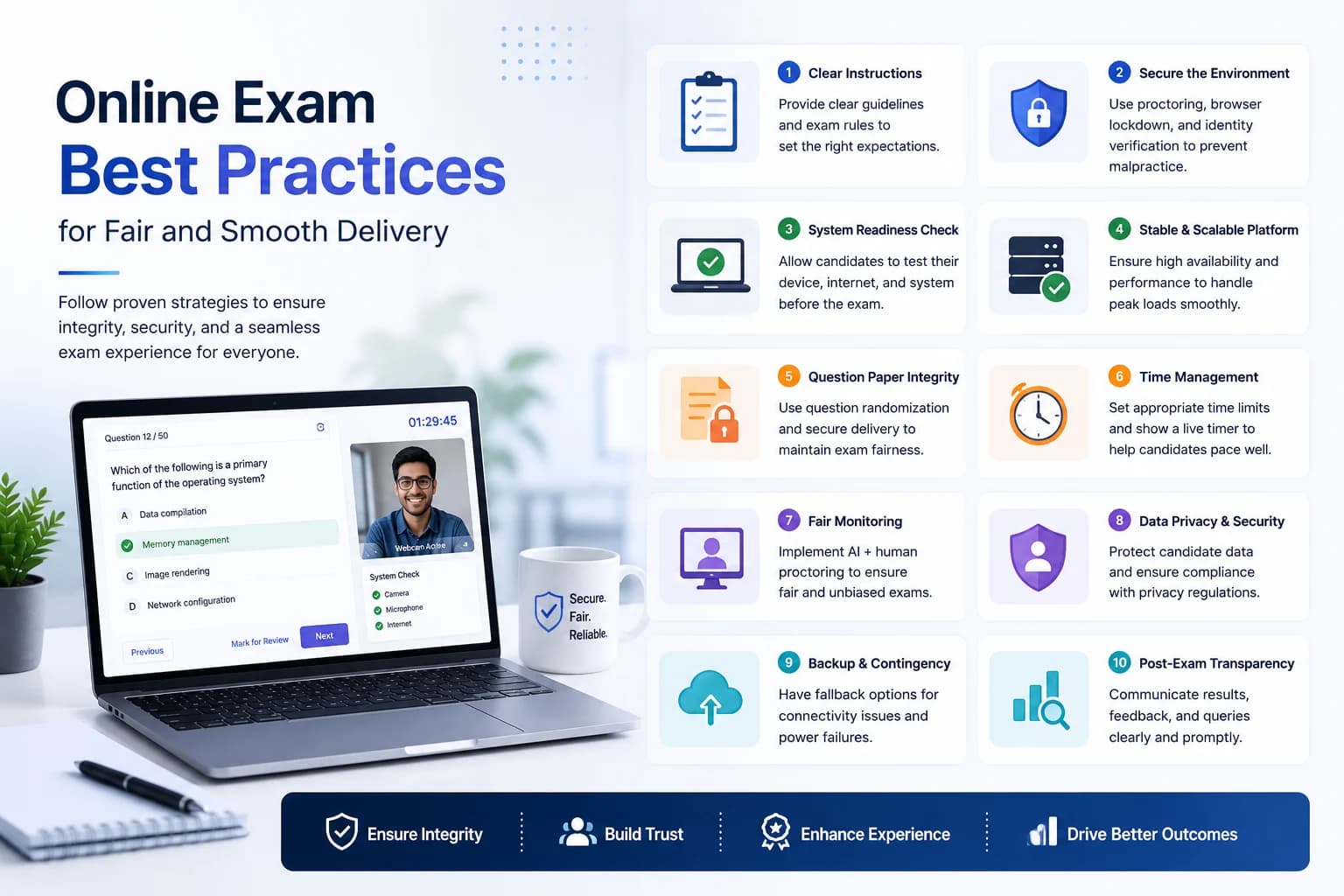
For a campus drive, the most effective integrity controls are question and option shuffle, a strict access window, and a large enough question bank that no two candidates can share an answer list that covers their entire paper. AI proctoring at campus scale is usually impractical — the overhead of reviewing hundreds of flagged recordings before interview day is prohibitive. Reserve proctoring for the final shortlist stage if needed.
Placement coordinators sometimes push back on online assessments on behalf of students: "not all students have good internet", "students are not comfortable with computers", "our campus does not have stable WiFi." Address these proactively. Confirm the platform works on mobile data (not just WiFi). Share a practice link the day before so students can test their connection and device. Offer a support number for the window period. Most objections dissolve once students have successfully completed one practice attempt.
Have a dedicated support contact for the duration of the window. Most campus drive issues are login problems, browser compatibility on older devices, and network drops. A support contact who can troubleshoot these in real time prevents candidates from being unfairly eliminated for technical reasons outside their control. Log every support ticket — if a pattern emerges, it may indicate a platform issue rather than isolated user error.
Results should be ready the moment the window closes. Auto-submit and instant scoring mean there is no post-exam processing delay. Export the ranked shortlist as a CSV sorted by score, with name, email, college, and total marks. Interview panels need a clean list, not a raw data dump. Prepare a version with scores and a version with just names (blind) if the panel should not see scores during the interview.